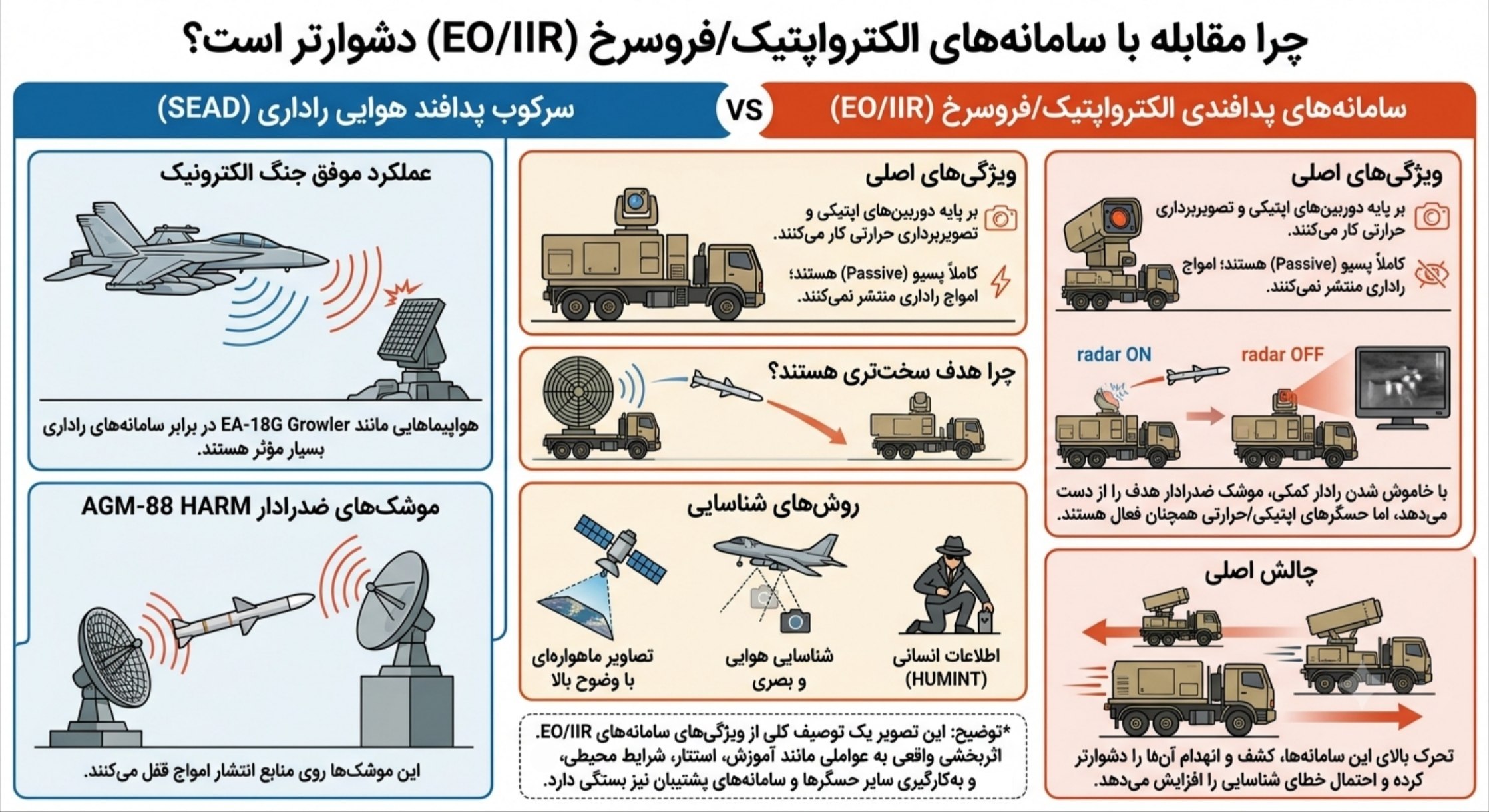
In recent years, both in Ukraine and the Middle East, electronic warfare tools such as the Gravel fighter aircraft, AGM-88 HARM anti-radiation missiles, and other jamming and cyber systems have been identifying, disrupting, and suppressing radar-based air defense systems with relative ease.
However, the story is different for electro-optical (EO) and imaging infrared (IIR) systems. These systems are completely passive, meaning they emit no radar or electromagnetic waves. For this reason, most classic electronic warfare tactics are largely ineffective against them.
Even if briefly linked to a supporting radar, once the radar is shut down, the missile is left without a target, but the system's core capability—thermal and visual imaging—remains active.
Detecting these systems has become far more difficult and relies primarily on high-resolution satellite imagery, aerial visual reconnaissance, and human intelligence. However, since these systems are mobile, there remains a significant margin of error.